Why cocoa and climate change could spoil the festive season
Introduction: A sweet tradition with a bitter truth
As Christmas approaches, chocolate becomes part of the season’s emotional fabric. Advent calendars count down the days with miniature treats, selection boxes appear under trees, and luxury truffles signal indulgence, comfort, and celebration. Chocolate feels timeless, almost innocent, woven into childhood memories and festive rituals. Yet behind the glossy wrappers and familiar brands lies a story that is anything but sweet.
Cocoa, the essential ingredient that makes chocolate possible, sits at the crossroads of climate change, deforestation, global inequality, and corporate responsibility. It is a crop uniquely vulnerable to environmental disruption, grown largely by smallholder farmers in some of the world’s most climate-exposed regions. As global demand continues to rise, particularly during festive periods, cocoa exposes a deep contradiction at the heart of modern consumption: the products that bring us comfort are often produced through systems under severe environmental and social strain.
This Christmas, the pressures on cocoa are no longer abstract. Climate change is already reshaping where cocoa can grow, how much can be produced, and who bears the costs. The result is a supply chain under stress, forests disappearing at alarming rates, and farmers struggling to survive, even as chocolate prices climb in wealthy markets. Cocoa has become a case study in how climate change collides with global food systems, and why seasonal indulgence can no longer be separated from environmental reality.
Climate change and Cocoa production
Cocoa is an unusually demanding crop. The trees thrive only within a narrow climatic window, typically within 20 degrees of the equator, where temperatures, rainfall, and humidity remain relatively stable throughout the year. Even small deviations can have significant consequences for yields, disease prevalence, and tree health. Climate change is now pushing many cocoa-growing regions beyond those tolerances.
Rising temperatures are one of the most immediate threats. Studies indicate that cocoa yields can decline sharply when temperatures exceed optimal ranges, with some regions experiencing reductions of 20 to 31 per cent where temperatures rise by up to 7°C above historical norms. Heat stress affects flowering and pod development, while also increasing evapotranspiration, leaving trees more vulnerable to drought. These are not projections for the distant future; they are impacts already being observed across West Africa, which produces around 60 per cent of the world’s cocoa.
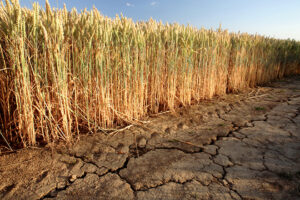
Rainfall patterns are also becoming more erratic. Cocoa trees depend on regular, predictable rainfall, but climate change is intensifying dry seasons while also increasing the likelihood of heavy, destructive downpours. Drought weakens trees and reduces yields, while intense rainfall can promote fungal diseases such as black pod, further cutting production. For farmers with limited access to irrigation, fertilisers, or resilient plant varieties, adapting to these changes is extraordinarily difficult.
As traditional cocoa-growing areas become less viable, farmers are often forced to expand cultivation into new land to maintain incomes. This expansion frequently comes at the expense of forests, creating a vicious cycle: climate change reduces yields, deforestation accelerates to compensate, and the loss of forests in turn worsens climate change by releasing stored carbon and reducing ecosystem resilience.
Economic pressures and fragile supply chains
The environmental vulnerability of cocoa has direct economic consequences, felt all the way from rural farms to supermarket shelves in the UK. Climate-related disruptions to production have contributed to tightening global supply, pushing cocoa prices to record highs in recent years. In 2024 alone, the UK imported approximately 57 million kilograms of cocoa beans, a trade increasingly exposed to climate volatility and geopolitical risk.
For chocolate manufacturers and retailers, this instability translates into higher costs, supply uncertainty, and shrinking margins. UK chocolatiers have already reported difficulties securing consistent supplies, with some reducing product sizes, reformulating recipes, or raising prices to cope with rising input costs (https://eciu.net). While these changes are often framed as inflationary pressures, climate change sits at the root of much of the disruption.
For farmers, however, higher global prices do not necessarily mean higher incomes. Cocoa markets are complex and heavily intermediated, and many farmers sell their beans at regulated prices or through systems that limit their exposure to global price rises. At the same time, their costs are increasing, as climate change forces greater spending on inputs, labour, and land. The result is a supply chain in which risk is disproportionately pushed downwards, onto those least able to absorb it.
This imbalance highlights a fundamental fragility in the chocolate industry. Cocoa is treated as a cheap, abundant commodity, yet it is produced under conditions that are neither environmentally nor economically sustainable. As climate impacts intensify, that mismatch becomes harder to sustain.
Deforestation and the carbon footprint of chocolate
One of the most significant, yet often overlooked, climate impacts of chocolate lies in land-use change. The conversion of forests into cocoa plantations is responsible for the vast majority of cocoa’s greenhouse gas emissions. Forests act as major carbon sinks, storing carbon in trees, soils, and ecosystems. When they are cleared, that carbon is released into the atmosphere, accelerating global warming.
In West Africa, decades of cocoa expansion have driven extensive deforestation. Côte d’Ivoire alone has lost around 80 per cent of its forest cover since the 1960s, much of it linked directly or indirectly to cocoa production. Similar patterns are seen in neighbouring Ghana, where protected areas have been encroached upon as farmers seek fertile land to maintain yields.
Deforestation is not simply an environmental issue; it undermines the long-term viability of cocoa itself. Forests regulate local climates, maintain soil fertility, and support pollinators and biodiversity. Removing them makes cocoa farms more exposed to heat, drought, and pests, locking farmers into a downward spiral of declining productivity and further land clearance.
For consumers, this means that the carbon footprint of chocolate extends far beyond manufacturing and transport. Each festive treat carries with it a hidden environmental cost, embedded in landscapes transformed to meet global demand.
Corporate responsibility and contested sustainability
Major chocolate companies are acutely aware of these challenges, at least rhetorically. Sustainability programmes, zero-deforestation commitments, and ethical sourcing labels are now commonplace across the industry. Yet progress has been uneven, and in many cases, insufficient to match the scale of the problem.
Despite years of pledges, cocoa-driven deforestation continues at significant rates. Monitoring and traceability remain weak, particularly in complex supply chains involving millions of smallholder farmers. Voluntary initiatives often lack enforcement mechanisms, and responsibility is frequently diffused across suppliers, cooperatives, and governments.
This tension became particularly visible in 2025, when Mondelez, the parent company of Cadbury, publicly called for a delay to the European Union’s deforestation regulation. The regulation aims to ensure that products sold in the EU are not linked to recent deforestation, including cocoa and chocolate. Industry concerns focused on compliance costs and supply chain complexity, but critics argued that further delays risk undermining one of the most significant policy tools available to curb forest loss (https://www.reuters.com).
The controversy illustrates a broader challenge: sustainability is often embraced in principle, but resisted when it threatens established business models. Without binding regulation and transparent accountability, corporate commitments alone are unlikely to deliver the transformation that cocoa urgently needs.
Fairness, justice, and labour in a warming world
At the heart of the cocoa crisis lies a profound issue of justice. Most cocoa farmers live on or below the poverty line, earning a fraction of the value generated by the global chocolate industry. Climate change compounds this inequality, hitting hardest those with the fewest resources to adapt.
Even as cocoa prices have reached historic highs on international markets, many farmers report little improvement in their living conditions. Price volatility, debt, and rising production costs erode potential gains, while climate-related crop failures push families further into insecurity. In this context, harmful labour practices, including child labour, persist not because of cultural indifference, but because poverty leaves families with few alternatives.
Decades of corporate pledges to eliminate child labour have delivered limited results. Climate stress threatens to reverse what progress has been made, as declining yields increase pressure on households to maximise labour inputs. Addressing labour issues in cocoa therefore cannot be separated from addressing climate resilience, fair pricing, and rural development (https://international.nwf.org).
Policy solutions and the need for systemic change
The EU Regulation on Deforestation-free Products represents one of the most ambitious attempts to tackle the environmental footprint of commodities like cocoa. By requiring companies to demonstrate that imports are not linked to deforestation, the regulation has the potential to reshape supply chains and reward more sustainable practices (https://www.cbi.eu).
However, regulation alone is not enough. Effective implementation will require investment in traceability systems, support for farmers to transition to climate-resilient practices, and fairer pricing mechanisms that reflect the true costs of sustainable production. Certification schemes, while helpful, must be complemented by structural reforms that redistribute value and risk more equitably across the supply chain.
Ultimately, sustainable chocolate demands a shift away from treating cocoa as a cheap input towards recognising it as a climate-sensitive crop that requires long-term stewardship. This means confronting uncomfortable questions about consumption, seasonality, and the true cost of festive abundance.
Conclusion: Rethinking Christmas treats
Chocolate will almost certainly remain part of Christmas celebrations, and few would argue that joy and tradition should be abandoned. But as climate change reshapes the world’s food systems, it becomes impossible to ignore the connections between festive indulgence and environmental impact.
Cocoa tells a powerful story about the limits of our current model: a system that relies on vulnerable ecosystems, underpaid labour, and endless growth in consumption. This Christmas, the challenge is not to give up chocolate, but to demand better from the systems that produce it. That means stronger regulation, genuine corporate accountability, and a willingness to align consumption with climate reality.
Only by addressing these deeper structural issues can the sweetness of festive treats coexist with a future that is fair, resilient, and genuinely sustainable